
Overview
Espial TV is a white-labelled, B2B app for live TV streaming which runs on web, mobile and TV platforms.
Most of the feature requests came from the clients. The clients raised complaints, requested features which went on to our product roadmap.
But what percentage of our end users really felt the same? Can we proactively identify user’s desires and pain points? That’s the problem we wanted to solve.
Problem
How might we make our product roadmap more user-centered and research-driven?
Team
UX Designer, Product Manager, Product Owner, Customer Support
MY Role
UX Team Lead, UX Strategist
Timeline
January 2022 – Present
ESTABLISHING THE RESEARCH ROADMAP
When coming up with concepts and designs for any feature, we did user research – we have run usability tests, card sorting activities and preference tests to ensure the designs for the feature, say X, is better in terms of user experience.
But these research activities we did tested if the design A or design B is better for feature X? We never asked ourselves if the feature X is what we really must work on? We did, what I call the Small Details Research approach.

But if we want to make our product roadmap research-driven, we first needed to change our research approach from Small Details to Big Picture.

I first gathered what questions we – as a Sales person, as a developer, as a designer, as a client – have about our users.
I then set up our first-ever Research Roadmap – a timeline of research initiatives to gather usage analytics and user feedback.

Analyzing THE RESEARCH Findings
Some of our findings…
Data Analytics
We already had a data analytics dashboard, where we captured basic usage data. Now we identified more data points to understand user’s behaviour and preference, and started tracking them.

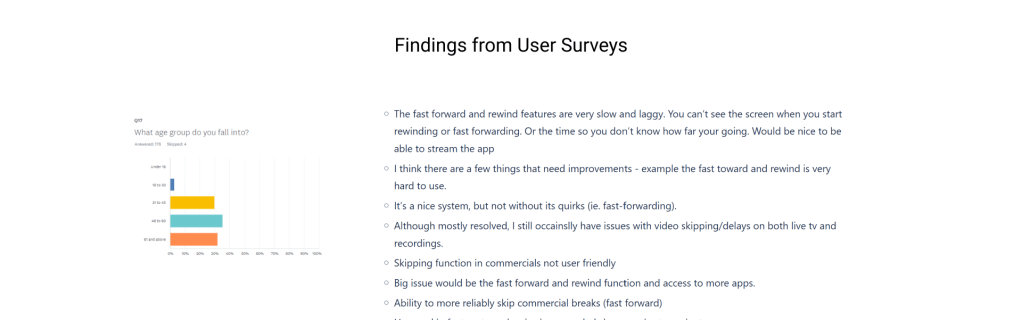
User Surveys
We sent out a user survey and we received X responses.
Letting THE research drive the product roadmap
What’s the simplest thing we could do that could provide the maximum impact for our users?
This was the problem we wanted to address.
From the above research findings, it became obvious what we should be focusing on.

Android TV. Player. Fast forwarding.
This led to the next UX challenge for our team to solve:
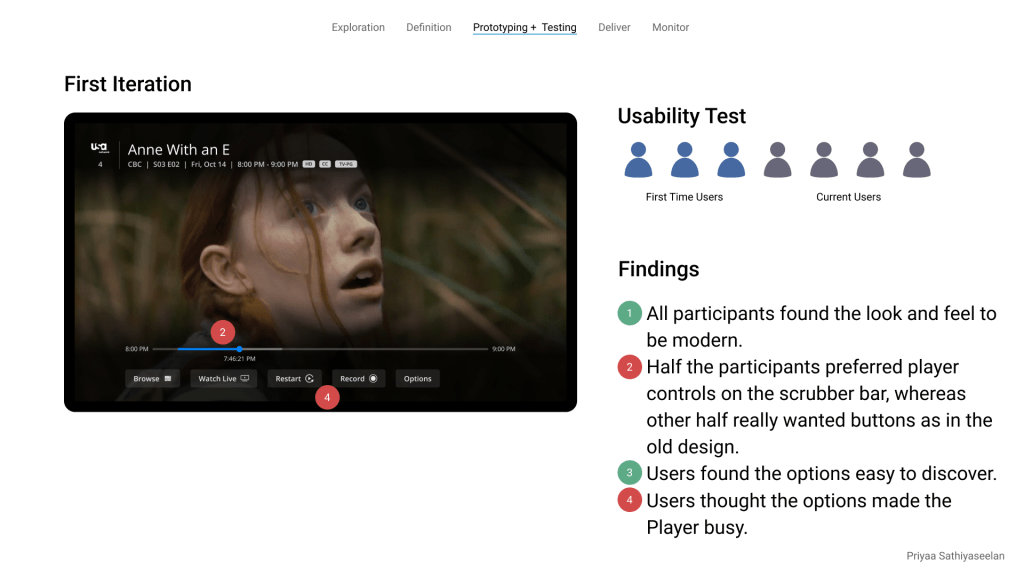
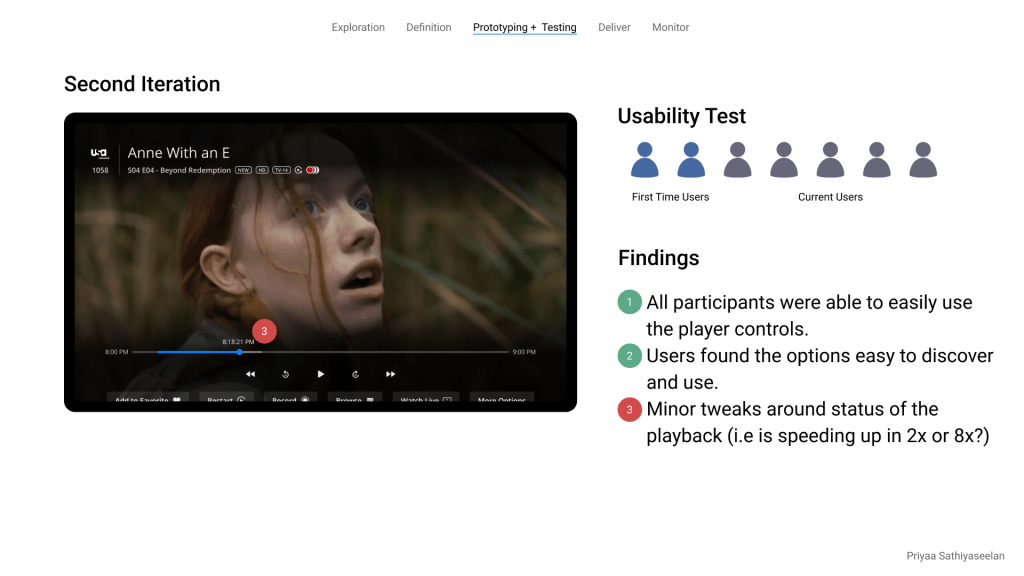
How might we improve the player experience on Android TV?
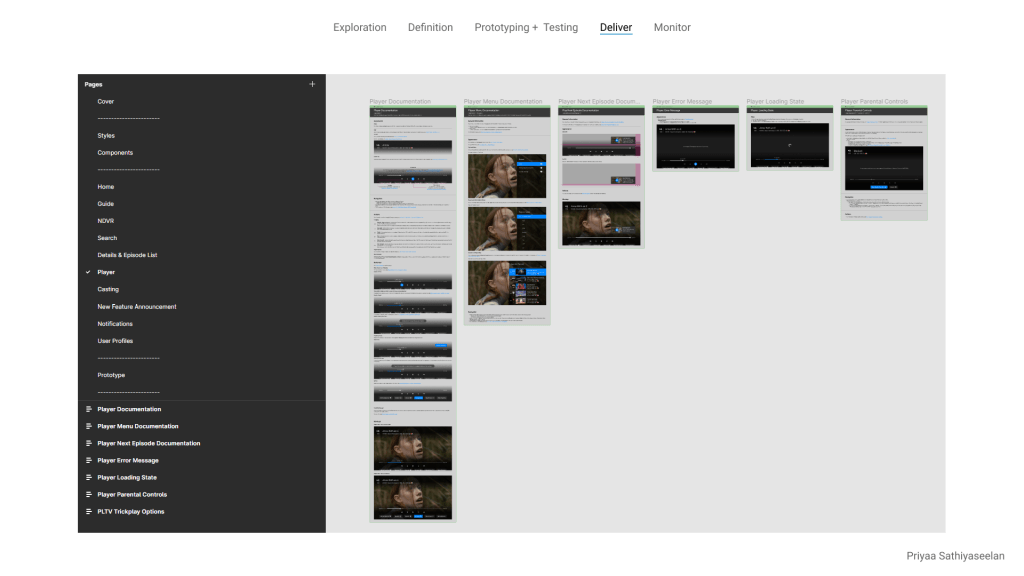
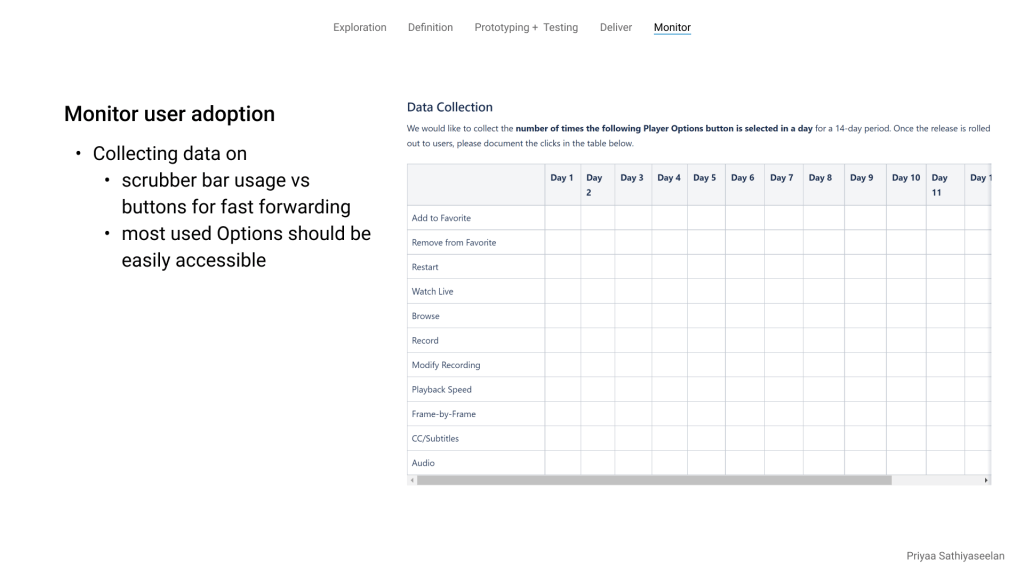
Since on this case study, I want to focus on how research data influences our product roadmap, I don’t want to delve into the R&D process here. But if, like me, you are generally curious, below is a slideshow of how we solved the problem.




measuring roi
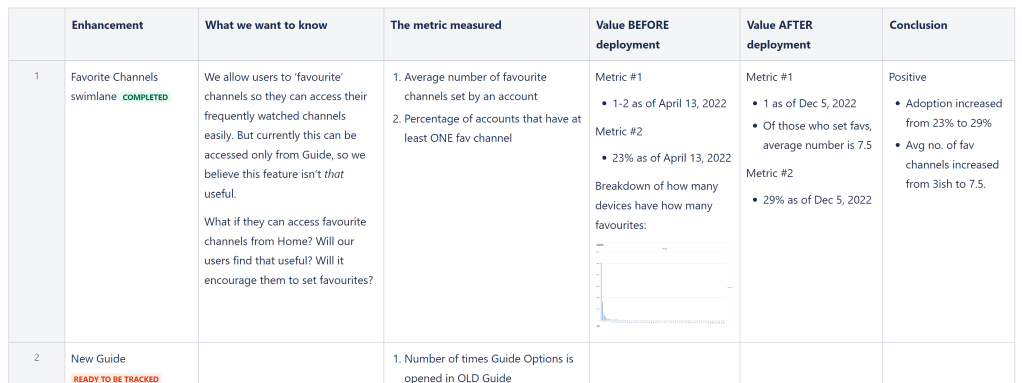
Okay, so we identified features that need work (or rework) and worked on them. But how do we justify the effort? What’s in it for the users? What’s in it for the business?
Success Metrics
In the past, we rolled out several features, but never really paused to reflect on how well the features were performing. As part of the Research Roadmap, we also started tracking data points before and after the feature roll-out to measure feature adoption and performance.
What’s Next?
We have come far from where we were a year ago, in terms of how much we know about our users. We will continue to gather more data, send out user surveys and conduct more usability studies. In addition we are planning to do some user interviews, come up with user persona and journey map.
Stay tuned!
 Priyaa Sathiyaseelan